One Year ago Capt Terry Hunter of PEI was part of this historical Mission, just reminiscing............
1 year ago - UNMIS History Made
Captain Terry Hunter of Charlottetown PEI has been serving Canada and Canadians as a UN Observation Officer since last August 2008. Here is his story of a historic trek within the Sudan part of his duties as a peacekeeper. Thankyou Capt.Hunter
ARTICLE BEGINS
Greetings Robbie:
First of all, I would like to say thanks for the Christmas card you sent which arrived in my UN teamsite at Torit, South Sudan right before Christmas. Unlike the troops in Afghanistan, there were no USO style concert shows for us or Christmas television broadcasts from us to our families at home. The three Canadians in the camp relied on the slow internet connections to send and receive our Christmas greetings back to Canada.
I am in my final weeks of my tour in Sudan. Six months has certainly passed by quickly. During the lead up to Christmas, two Canadians, Maj Troy Kelly and myself, were part of a Long Range Patrol (LRP) team that made UN history in that it was the furthest east towards the Ethiopian border the UN had gone. The purpose of our mission was to show the UN Presence to the people of the area, monitor the security situation, monitor progress of Civilian Disarmament, ascertain the knowledge of the people about the upcoming election, liaise with Non-Government Officials in the area, determine the level of cattle and goat raiding by the tribes in the area and conduct a route Recce from the village of NANYANAHOR to the Ethiopian Border and to Kuron and collect info regarding presence of Sudanese Peoples Liberation Army (SPLA), the Lord's Resistance Army (LRA) and any other armed groups (OAGs) operating in the area.
The patrol traveled approximately 1000 kilometres round trip in six days over paths up and down mountains that not roads but rocky river beds. Because the areas would be impassable to our Bangladesh Force Protection vehicles, they established a base camp at a village called NARUS while the Joint Monitoring Team (JMT) consisting of six UN Military Observers from Canada, New Zealand, Fiji and Thailand, a Japanese civilian Electoral Officer and a Sudanese People's Liberation Army National Monitor started the long trek towards the Ethiopian border. We set up our single person tents for our first night at the base camp in NARUS and prepared our vehicles for the next day. During the night, we could hear the yipping and howling of hyenas coming from the nearby hills. We said goodbye to our Bangladesh Force Protection early the next morning. We would only be in contact with them by satellite phone twice a day during the next four days.
The roads towards the village of NANYAGACHOR were very flat, sandy and surrounded by scrub vegetation. Our vehicles raised clouds of Sudanese dust as we made a breathtaking speed of almost 60 km per hour in some areas. For the terrible roads in the south Sudan, this is breathtaking speed. During the wet season which ended a month before, we would have been crawling through mud holes at 5-10 km per hour. At all times, we were wary of possible mines and unexploded ordinance.
It was during this second day out that we made our first encounters with the Toposa tribe of South East Sudan. This was Africa as you would see it in National Geographic magazine in terms of the dress, jewelry, tribal body scarring and accommodations. In the south east of Sudan, there is little Western influence and clothes are very much optional. The child mortality in the remote areas is astronomical and many children don't make it past infancy. However, they seem to be the happiest kids we've encountered. The Toposa live in such a fragile environment, we could appreciate how a drought or conflict can completely devastate them and take years to recover.
Many of the Tukul mud huts were on stilts to keep them off the ground and all the villages we encountered had fences made out of thorn bushes to keep out the wild animals. We were in lion, leopard and hyena country. Several Toposa tribe members were armed with AK-47 assault rifles but that was to protect their large herds of cattle from raiders from other tribes. However, we had nothing to fear as all the locals we encountered were friendly towards us. Some even carried spears that had been probably manufactured in the days of General Gordon's days in Khartoum back in the 1880s.
The roads we traveled on varied from sandy plateaus to very rocky terrain. At one point, we forded a large marshy river where the water reached the top of our engine bonnets. We had to go slow to ensure our engines did not get flooded out with water as we were not equipped with snorkels. The majority of the area would have been impassable during the rainy season. However, the rains had ended in November and at the end of the day, we were banging out clouds of dust from our engine air filters.
The majority of the Toposa tribe - especially the children - had not seen white people before and were a bit nervous at first. However, they soon warmed up to us and in every village we stopped, both children and adults were touching and rubbing my hands and arms. When I enquired the reason why to an English speaking Toposa who had been educated in a Christian school, he replied that the tribe members were trying to see if the white came off to reveal black skin underneath. It was quite a reaction from them when I removed my watch strap to show the white tan line under it.
Christmas came early to the Toposa tribe. Whenever we stopped, we handed out treats to both the children and adults. It was the first time some had ever tasted candy and gum. They were also delighted to receive the small paper Canadian flags I have been handing out although one of our New Zealand UNMOs joked that the tribe members were pleased that I was providing them with toilet paper. Whenever we passed a village, the children would run and follow us down the road. We had hoped to reach the village of NANYANACHOR that night but because of the fading light, we pulled into a fenced compound containing a church and school near the village of NAPWATISIGIRIA. We had traveled about 6.5 hours over rough ground. Again, many of the locals came to visit us in the compound. We prepared our supper meal, and, as was the usual throughout the entire trip, gave half of our rations away to the hungry children. Later we bought a couple of live roosters off some of the children and one of our New Zealand UNMOs did the honour of lopping off the heads with a machete. This is a normal way of life over here as we daily see chickens for sale in markets and the locals heading home to their villages with three or four live chickens held by the feet. There are no supermarkets over here to purchase packaged meats. The kids plucked the roosters for us and we later boiled them up for a late meal, again sharing it with the children who sold them to us.
Major Troy Kelly handed out bubble gum to both children and adults that evening and we had a great time watching them learn to blow bubbles. Troy also gave out small rubber bouncing balls, a soccer ball and a rugby ball. We had a great evening playing some games with the locals. Later, I struck up the bagpipes and, of course, I can assume that this was the first time this kind of instrument has been played in this area. Judging by the reactions on their faces, the Toposa tribe members were probably wondering why this Kwarja (local non-derogatory term for white man) was torturing a bag of cats. As darkness fell, the Toposa tribe members left the compound for their village of LOMULEYE not far away. They returned in the morning to again sample our breakfast and say goodbye to us as we continued on our Long Range Patrol.
After a quiet night in the compound, we headed off at first light toward our next destination which was NANYANACHOR. By this time, we were drinking hot water as our water bottles were heated by the 45C temperatures inside the vehicles. The air conditioners could not keep up with the South Sudan temperatures. It was a long way from the December snow storms in PEI.
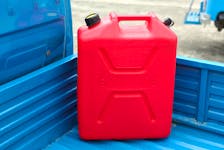
We stopped at a large village called NAPUSUSIRIA to confirm our location and to talk to representatives from Doctors without Borders. Again, our vehicles were surrounded by Toposa tribe members. We noticed that many of them were using cups to catch some diesel fuel that had spilled out of Jerry cans into the back our echelon pickup truck. We had to stop the tribe members from drinking the fuel as they thought it was medicine.
Once we confirmed our location, we headed off to NANYANACHOR which was approximately 15 minutes east. We were informed that there was an Irish priest by the name of Father Sean in the village. We arrived at approximately 1000 hrs but Father Sean was conducting mass as it was a Sunday. Father Sean was both surprised and delighted to see us and he answered our inquires about the road ahead to the Ethiopian border. Our plan was to proceed to the border, show the UN presence to the villages in the area and return to NANYANACHOR to spend the night.
Again, we passed many villages with the children greeting us with Ma-Ta (hello), Jokoloi (goodbye/I'm happy) and Alacara (thank you). Treats were also passed out as we drove by and luckily I still had several small Canadian flags to hand out also. Although the children were friendly towards us, they were vary wary of us. I noted that when one of the New Zealanders threw a tennis ball from his vehicle towards some kids as we drove by, they immediately scattered probably thinking it was a hand grenade. This country had been at war for several years before the peace agreement being signed in 2005.
Every boma (village) we passed, there were at least 10-30 children running out to the road and when we said Ma-Ta, the kids were gleaming with smiles and returned with a Ma-Ta!!. Even the cattle herders with rifles on their backs would all smile and wave when we said that one word: Ma-Ta.
We then proceeded up 2000 feet in elevation over the most extreme rocky terrain for 40 kms. The path was not a road but a dry rocky river bed that ran down the mountain. The path opened onto a flat plateau and again we encountered several large villages along the way. However, we noted that two of our vehicles broke torsion bars about 20 km from the Ethiopia border. This was the furthest anyone has traveled east in the UN Mission in Sudan history. We had a quick meeting and made the decision to turn back towards NANYANACHOR as it could have become a survival situation if one of our vehicles had suffered a further breakdown. We were on our own out there and it would have taken several days for supplies to reach us by UN helicopter.
After coming down the mountain through the same rocky river bed paths we went up, we arrived in NANYANACHOR in the late afternoon. Again, more kids sold us roosters and we had them for supper which supplemented our rations. We again shared our rations and rooster supper with the children from NANYANCHOR. I had music playing from my MP3 player over my vehicles stereo and noted several of the kids dancing to the music. I handed out several paper Canadian flags to them and videotaped them dancing to Def Leppard. They put on a great show and laughed at themselves when I played the video back to them.
Night soon fell and, under a full moon and starry sky, we listened to the sound of African singing and instruments coming from the village. Again the children arrived early in the morning, shared our breakfast and bid us farewell as we headed north towards the village of KURON which has its own website at http://www.kuronvillage.net/
We arrived at Kuron about five hours later. There we set up our camp and went to check out a new medical facility and an aircraft landing strip. While at the landing strip, close to 1000 head of cattle suddenly appeared from the brush and moved through us with their cow bells clanging. Troy Kelly was on the satellite phone establishing contact with the Bangladesh Force Protection and was wary of several curious cattle wanting to make friends with him. Again, we talked to the herders who were all armed to prevent raiders from stealing their cattle. The Toposa cattle herders have little use for money and store their wealth in cattle Therefore, a cattle raid is like a bank robbery to them. Hopefully, there will be enough police established in the area in the future and the civilians will be able to turn in their weapons as part of the disarmament program happening in Sudan.
After checking out the airstrip and a new medical facility just outside Kuron, we bedded down for the night in our one man tents. Sleeping bags were not needed due to the temperatures and poncho liners sufficed. Before leaving the next day, Troy and I donated soccer jerseys and a soccer ball to the children of KURON which had been sent to us from Canada. At 0730 hrs we started the long journey back to the base camp at NARUS. Again we had to ford the large marsh which had risen because of some rain in the area overnight. By 1530, we arrived back in NARUS. We lined up outside the campground compound and piped the UN vehicles in to the applause of the Bangladesh Battalion whom we left four days previously.
December 16th was the anniversary of the Bangladesh Independence from Pakistan with whom they fought a bitter war back in the early 1970s which resulted in three million deaths. We were invited by the Bangladesh Battalion to observe a commemoration much like our Nov 11th Remembrance Day. While the Bangladesh guard presented arms, I played a lament on the bagpipes in memory of their losses. Several Bangladesh soldiers had lost family members during the war.
The next day our 6th day of the patrol, we returned to our UN camp in Torit. On the way, we stopped in at one of the Joint Integrated Units (former Sudanese Peoples Liberation Army and Sudanese Armed Forces combined into one unit) posts to conduct a verification of their weapons in accordance with the Certified Peace Agreement (CPA). The two New Zealanders and myself each performed the proper unload drills for the AK-47 assault rifles we were given to ensure they were properly cleared. It was a good thing we did take the time to clear each weapon as I was surprised to see a round ejected from the chamber of one of the AKs when I cocked the action after first removing the magazine. The weapon, which had been handed barrel first to me, was fully loaded with a 30 round magazine and had a round up the chamber. A close call.
After a successful and very cooperative verification, we bid our farewell to the Commander of the JIU and headed back to team site Torit. After dropping off our National Monitor and Language Assistant, we arrived in the UN camp. We were pretty exhausted and dirty but elated after a successful patrol. After several days of drinking nothing but hot water heated by the sun, a cold beer from out canteen went down well.
The patrol members had performed a successful mission and also made UN history by being the first UN members to travel so far to the east in the south of Sudan. The patrol to NANYANGACHOR and the Ethiopian border is all but a distant memory now but one the members, and several hundred members of the Toposa tribe of South East Sudan, will never forget.
Best regards
Terry Hunter
Capt
UN Military Observer
Teamsite Torit
South Sudan
Please show your SUPPORT for all our troops globally, they are serving Canada and the world.
Nil Sine Labore
Robby