• Article
  • Print
  • Send to a friend
  • Comment (1)
  •  

Military Blog Site - with Robby McRobb Blog

E- mail from Capt.Terry Hunter. . . . . Canada and The UN

A couple of Days ago I received a most welcome E mail from Ottawa. A Native of PEI Captain Terry Hunter,wrote to me and asked if I would like to receive sitreps from the Sudan, as he is preparing to depart Canada on his latest mission. As a representative of Canada in the UN Mission in the Sudan, I immediately answered in the affirmative. So as we wish Capt Hunter God Speed and a safe journey to the Sudan, we look forward to his reports.

Captain Hunter has been educating local school children, about veterans of the wars here on PEI. He is an accomplished Piper the son of a Scots WW2 Veteran. I had the honour of sharing a table with Capt Hunters, Father and brother at the Ombudsman's dinner.

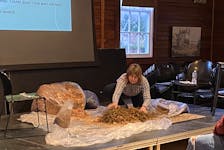
Capt Hunter sharing history with the younger generation.

2005-ongoing: UNMISUnited Nations Mission in the Sudan. Canada is contributing a total of 31 troops, police and military observers. In 2006, the mandate of UNMIS was expanded to include its deployment to Darfur in support of the implementation of the Darfur Peace Agreement.

sIFR_callback_1_DoFSCommand(info, args);Myths and Facts - Canada and UN Peacekeeping

Myth #1

Canada leads the world (per capita) in sending peacekeepers on foreign missions. Fact

Canada has always been a strong supporter of the United Nations (UN) and of peacekeeping, and has participated in almost every mission since its inception. However, the extent of Canadas contribution in terms of peacekeeping personnel (and in terms of percentage of cost of peacekeeping missions) is on a clear decline. As of August 31, 2006, Canada ranks 55th out of 108 troop contributing countries with 126 military observers, UN police and troops to UN peacekeeping missions. This is less than France with 806, the United Kingdom with 350, and the United States with 345. The top contributors are Bangladesh, Pakistan, and India with 10,156, 9,820, and 9,279 troops respectively.

Nevertheless, Canada contributes to UN peacekeeping in other ways. For example, Canada provided diplomatic, financial and expert support to the African Union throughout the peace process. Canada is also assisting the African Union with strategic planning, logistics and air operations, training, information support, and communications. For more information on Canadas contribution to UN peacekeeping see Factsheet #2 on Canada and UN Peacekeeping. Myth #2

Peacekeeping is the same as peacemaking. Fact:

Peacekeeping refers to the prevention of further conflict between parties. The deployment of peacekeepers, both international military and civilian personnel, occurs once a cease-fire has been negotiated and requires the consent of the parties to the conflict. In general, peacekeepers are deployed in order to monitor the implementation of the cease-fire and to oversee the resolution of conflict. Peacekeepers may also be asked to assist in a number of additional tasks, including promoting human security, disarming opponents, repatriating refugees, providing electoral support, strengthening the rule of law, protecting the delivery of humanitarian relief, and train local police forces.

Peacemaking, on the other hand, refers to peaceful efforts to stop a conflict or prevent its spread by bringing hostile parties to an agreement. These efforts are usually peaceful in nature; they incorporate diplomatic techniques such as facilitation, mediation, and arbitration. Peacemaking occurs prior to or during a conflict with the objective of negotiating a resolution to the conflict.

While both terms are different, they remain integrally related. Both peacemaking and peacekeeping efforts provide a strong foundation for post-conflict peacebuilding, and help to prevent the re-emergence of violence. Myth #3

A peacekeepers main purpose is to forcibly control conflict between two or more parties. Fact:

The main purposes of peacekeepers are to monitor cease-fires, maintain the separation of forces, protect humanitarian operations, and assist in the implementation of the peace agreement. While the use of force should always be seen as an instrument of last resort, the UN recognizes that in certain situations, peacekeepers are being deployed where the peace is precarious and conflicting parties pursue their fighting, even after the conflict has formally ended. Under such circumstances, the Security Council can request a UN peacekeeping operation with a more robust mandate. Such an operation is based on Chapter VII, which requires peacekeepers to use all necessary means to protect civilians, prevent violence against UN staff and personnel and deter armed parties from ignoring peace agreements. Myth #4

Anyone can go on a peacekeeping mission, as long as they do not have a criminal background. Fact:

Peacekeepers are primarily made up of international military and police forces. They are trained forces that are sent to a mission by their home countries. In Canada, the Canadian Forces contribute the military component while the RCMP (and other police forces) contributes the police component. Increasingly, civilians are being asked to engage in peacekeeping operations and humanitarian intervention. Not anyone, however, can take part in a peacekeeping mission. Civilians aspiring to become peacekeepers must have a university degree, as well as 4 to 5 years of professional experience in the field. Another prerequisite includes being able to work in harsh physical conditions for long hours. For more information on the recruitment for peace operations see https://jobs.un.org/

Canada is currently on a UN Peacekeeping mission in Afghanistan. Fact:

Canadian Forces personnel are serving in Afghanistan under the International Security Assistance Force (ISAF) mission led by the North Atlantic Treaty Organization (NATO). While this mission is authorized by the UN Security Council, its mandate and leadership is assumed by NATO. Consequently, the mission is not considered a UN peacekeeping mission. Since its inception in 2001, ISAF is committed to stabilizing Afghanistan and to creating a more secure environment within which the countrys reconstruction can take place. Working alongside the NATO mission is a United Nations Political mission, the United Nations Assistance Mission in Afghanistan (UNAMA). UNAMA has been working in Afghanistan since 2002 with the goal of supporting the rebuilding and national reconciliation process. The presence of both missions demonstrates the benefits of cooperation between various organizations, as the NATO mission, in helping to maintaining security, also fosters a more stable environment in which UNAMA and other UN agencies can function.

Myth #6

The UN is no longer effective to solve todays conflicts. Fact:

The UN has often been criticized on the basis of its ineffectiveness, its high cost, and for hindering diplomatic initiatives aimed at developing a stable and lasting peace. The UN has also been criticized for its limited preparedness, slow deployment, and for the lack of deterrent capacity of peacekeepers. In addition, as the UN does not have a standing army, it relies on the financial and troop contribution of Member States. Even so, the UN remains an effective framework to solve todays conflicts. United Nations operations, because of their universality, offer unique advantages as a means to address conflicts. Their universality adds to their legitimacy and limits the implications for the host countrys sovereignty. Moreover, peacekeepers from outside a conflict can foster discussion among warring parties while focusing global attention upon local concerns, opening doors that would otherwise remain closed for collective peace efforts. For more information on the advantages of UN peacekeeping operations see http://www.un.org/Depts/dpko/factsheet.pdf. Myth #7

Canada only takes part in UN designated peacekeeping missions.

Fact:

Regional and other international organizations other than the UN can also undertake peacekeeping missions. These include the European Union (EU), the African Union (AU), the North Atlantic Treaty Organization (NATO), the Organization for Security and Co-operation in Europe (OSCE), and the Economic Community of West African States (ECOWAS). A peacekeeping mission may also take place through a coalitions of willing countries. While the operations led by regional or international actors take place outside of the UN, they are generally authorized by the Security Council. For example, the African Union Mission in Sudan (AMIS) is authorized by the UN, but it takes place under the leadership of the African Union.

Canadian troops participate in both UN and non-UN peacekeeping missions. For example, Canada takes part in the Multinational Force and Observers (MFO), an independent (non-UN) peacekeeping mission operating mainly in the Sinai Peninsula. The MFO was created following the 1978 Camp David Accords and 1979 Egyptian-Israeli Treaty of Peace. Its mission is to supervise the implementation of the security provisions of the Treaty of Peace and prevent any violations. By comparison, Canadas contribution to the UN Stabilization Mission in Haiti (MINUSTAH), the UN Organization Mission in the DRC (MONUC), and the UN Mission in the Sudan (UNMIS), takes place under the auspices and leadership of the UN.

Myth #8

Canadian peacekeepers are all men. Fact:

International and Canadian peacekeepers include both women and men. At the beginning of 2006, women constituted approximately 1% of military personnel and 4% of police personnel in UN peacekeeping missions. In addition, women account for 30% of the international civilian staff and 28% of the nationally recruited civilian staff. Although women are fewer than men, especially in military and civilian police forces, participation is increasing. Canada, like many other troop contributing countries, encourages the participation of women in peacekeeping operations.

In recognizing the crucial role of women in peacekeeping operations, the UN Security Council adopted in 2000 resolution 1325 on women, peace and security, to address the impact of war on women and to underline the importance of the participation of women in all facets of UN peacekeeping. In fact, research shows that women can play a key role in peacekeeping situations. Women peacekeepers are often more accessible than men and they can provide a greater sense of security to the local population. Such role is particularly important in communities of mostly women and children, and when encountering victims of sexual abuse, or women that are forbidden from talking to men other than their relatives.

Resolution 1325 also recognizes the contribution of local women to decision-making in conflict prevention and their proactive role in building local capacity as part of peacekeeping and peacebuilding efforts. According to the 2004 Report of the Secretary General on Women and Peace and Security, Women can call attention to tensions before they erupt in open hostilities by collecting and analysing early warning information on potential armed conflict. Women play a critical role in building the capacity of communities to prevent new or recurrent violence. Womens organizations can often make contact with parties to conflict and interface with Governments and the United Nations.

Myth #9

The decision to take part in a peacekeeping mission is a military one. Fact:

Once the decision to deploy a peacekeeping mission has been approved by the Security Council, troop contributing countries must decide whether to send personnel or not. As the UN does not have a standing army, it relies upon each Member State to volunteer both military and police personnel. The deployment of peacekeepers, including the financial costs, remains under the authority of the Government that volunteers the troops.

At the Canadian level, the decision to participate in a peacekeeping mission is first and foremost a political one. The decision is taken by Foreign Affairs Canada (FAC), in consultation with the Department of National Defence (DND), and the Canadian International Development Agency (CIDA), as well as other concerned government departments. DND is responsible for assessing the availability and capacity of military personnel, while the Royal Canadian Mounted Police (RCMP), along with other police forces, assesses that of police personnel. Funding for military contributions comes from DND, while police contributions are funded by CIDA. The final decision to participate in a peacekeeping mission is made by Cabinet. While Parliament does not need to approve Canadian participation in a peacekeeping mission, discussions remain frequent in both Parliamentary committees and the House of Commons.

Please Support your Troops Wear something red on a Friday. put up a Yellow Ribbon on a tree, a post your verandah.Thankyou.

Nil Sine Labore

Robby

Comments

  • Username
    Rob
    - June 29, 2010 at 08:50:48

    Canada's peacekeeping contributions are mostly a smoke and mirrors illusion.
    We contribute personnel to most missions but often it's only one or two observers within a large force.
    On other peacekeeping forces our contribution has been only logistical and communications units which only amount to support for the actual peacekeepers.
    When we did contribute actual peacekeepers to missions they were relatively few in respect to the overall numbers. Cyprus: One battalion of about 650 troops.
    The former Yugoslavia was actually more of a peacemaking role. Well done under the circumstances.
    All of those other places such as African nations we had one or two people involved and someone put a little Canadian Flag on a map denoting Canadian involvement. Not much but enough to say we were there.
    All and all it was nothing but BS.

    By the numbers I would say that Bangladesh, India and Pakistan are the world's real peacekeepers and we've been stealing their show. Shame on us.

    Submit a Comment

Submit a Comment

Submit a Comment

This form is NOT used for emailing the article to a friend. Please use the "Send to a friend" link at the top of the page for that purpose.

The Guardian is not responsible for posted comments. Please be polite and confine your comments to the subject of the posted story. If you have an account, please sign on to it..

(we keep all emails private)
Agreement

We ask that users remain courteous. You may not post insulting, discriminatory or inappropriate content, which may be removed at our discretion. We are not responsible for user content and opinions. Use of this site as well as content submission & ownership are governed by our Conditions of Use and Privacy Policy.

Member organizations should be non-profit in nature, and promote legal activities. Any organization found promoting illegal activities or commercial products or services will be deleted from the site.

I agree with these conditions.

Notice
The management of this site indicates that it is not liable for persons, organizations and / or organizations to register in order to promote and make themselves known. Moreover, the managers of this site should not be held responsible for errors or other errors that slip inside information recorded under this heading.

Advertising

Expert bloggers

Ride for Heart
Blogger
Heart and Stroke Foundation
Sore buns . . . happy heart!
[Sponsored]

More bloggers here

Newsletter

Please enter your email to receive our free newsletter

Subscribe to news alerts
loading...

The Guardian Twitter

Advertising